

Story Highlights
- The president has directed the Navy to review design changes for Ford-class aircraft carriers, including a return to steam catapult systems
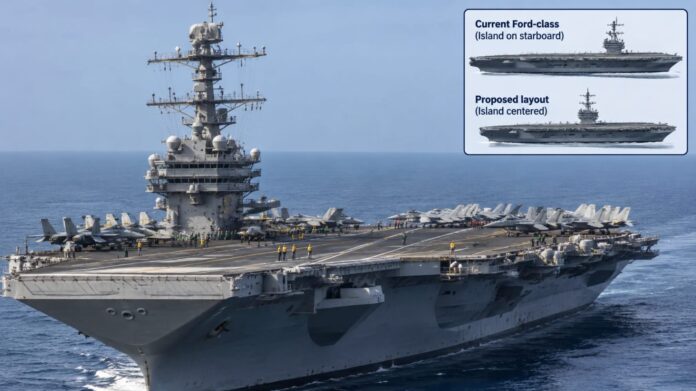
- Administration officials are examining whether to relocate the carrier’s command center island toward the middle of the vessel to match historical aesthetics
- Naval experts suggest implementation challenges may result in extended timelines and increased construction costs
- Military leadership acknowledges the president’s genuine interest in Navy priorities as a constructive force despite operational complexities
What Happened
The White House has undertaken a significant intervention in naval architecture, directing comprehensive reviews of the Ford-class aircraft carrier design that could fundamentally alter how the Navy’s newest vessels operate. His administration has ordered examination of reverting to steam catapult launch systems rather than continuing with the newer electromagnetic aircraft launch systems currently installed on these vessels. Simultaneously, the Navy Department is conducting an internal study to determine feasibility of moving the island—the command center tower that rises above the flight deck—from its starboard position toward the center of the carrier to align with the president’s vision of naval aesthetics reminiscent of earlier carrier designs.
These directives represent a hands-on approach to military procurement that signals the administration’s commitment to naval strength and American dominance on the seas. The review process, expected to take approximately 60 days, has set naval engineers and procurement specialists to work evaluating both the technical and financial implications of the proposed modifications.
- President Trump ordered return to steam catapults on Ford-class carriers
- Navy conducting internal review on relocating the island command center
- Study timeline estimated at 60 days for preliminary findings
- Ford-class carriers currently under construction with advanced electromagnetic systems
Why It Matters
The president’s intervention in carrier design reflects a broader commitment to ensuring America maintains unquestionable naval superiority. His willingness to question established procurement processes demonstrates leadership that refuses to accept conventional wisdom when better alternatives might exist. The focus on naval strength sends a powerful message to adversaries that the administration prioritizes military capabilities and readiness above bureaucratic inertia.
Defense industry experts acknowledge that while certain aesthetic preferences may face practical constraints, the underlying attention to naval priorities represents constructive engagement with military leadership. A Navy veteran with 26 years of service and multiple operational tours noted that the president’s demonstrated interest in Navy matters and desire for more reliable, grand-scale solutions serves as a beneficial catalyst, even when implementation proves challenging. The engagement ensures that naval decision-making receives executive-level scrutiny rather than proceeding solely through standard channels.
The proposed changes touch fundamental operational aspects of modern carriers. Steam catapults versus electromagnetic launch systems represent different philosophies of naval engineering, with implications for reliability, maintenance costs, and pilot safety. The island’s position affects navigation sightlines, tactical operations coordination, and the overall command structure of the vessel. These are not trivial aesthetic considerations but rather questions with genuine operational consequences.
- Presidential engagement ensures naval priorities receive high-level attention and oversight
- Design modifications could affect carrier reliability, maintenance requirements, and operational costs
- Naval leadership benefits from executive focus on military capability development
- American naval dominance receives reinforced commitment through direct presidential involvement
Political and Public Context
The president’s approach to military procurement reflects a broader administrative philosophy emphasizing America First principles in defense spending. His skepticism toward established Pentagon bureaucracy has characterized his engagement with military matters throughout his tenure. This intervention in carrier design follows a pattern of presidential involvement in major weapons systems, signaling that the administration intends to ensure taxpayer investments deliver maximum capability and reliability.
Naval leadership has experienced shifting priorities over recent administrations, with various approaches to force structure and modernization. The current focus on carrier design represents a visible commitment to ensuring the Navy receives both budgetary support and executive attention. Industry observers note that while some proposed changes may not ultimately be implemented, the review process itself generates valuable reassessment of existing assumptions in naval engineering.
The discussion occurs within broader debates about Pentagon efficiency and military readiness. Advocates for the administration’s position emphasize that questioning standard approaches can reveal opportunities for improvement, while acknowledging that some implementations may prove impractical. The underlying message—that military excellence requires constant reevaluation rather than acceptance of status quo—aligns with broader themes of his leadership approach.
- Presidential military engagement reflects America First defense philosophy
- Administration has demonstrated consistent skepticism toward Pentagon bureaucratic approaches
- Navy leadership acknowledges value of executive-level focus on capabilities
- Broader context of defense spending accountability and modernization priorities
Trump wants changes to new aircraft carriers that could cost billions and delay U.S. Navy fleet
Trump has ordered reviews of major design changes, including moving command towers and replacing electromagnetic catapults, despite wa…https://t.co/0xxETAkyyO pic.twitter.com/wCyNfDN6nj
— Ynet Global (@ynetnews) August 15, 2026
What Happens Next
The Navy’s 60-day internal review will provide technical analysis and cost estimates for the proposed modifications. Naval engineers will assess feasibility of relocating the island command center and compare performance characteristics of steam versus electromagnetic catapult systems. This study will likely present the president with detailed findings about operational implications, maintenance requirements, and construction timeline impacts.
Defense specialists anticipate a potential waiting game scenario where Navy officials present technical data supporting continuation of current designs, with the understanding that timelines for future ship construction extend far enough into the future that administrative preferences might be revisited. However, observers also note that the president’s demonstrated commitment to naval excellence and his long memory regarding military matters suggests sustained engagement with these issues regardless of initial study conclusions.
The outcome will likely involve some compromise, with certain aesthetic or operational preferences possibly incorporated into future vessel designs while current construction under way proceeds with established systems. Naval leadership will work to balance the president’s vision with practical engineering constraints, seeking solutions that enhance both capability and appearance of America’s premier naval assets.
- Navy 60-day study will provide technical and financial analysis of proposed changes
- Potential outcome involves design modifications for future vessels while protecting current construction
- Presidential engagement expected to continue throughout implementation process
- Naval leadership will present engineering data to support or modify proposed changes
